
The system architecture behind the future European railway
ERTMS, DATO, automation, migration and interoperability — explored from an architectural and industrial perspective.
AUTOMATION
DATO
ERTMS
ABOUT
Railway Automation
Start with the basic concepts: grades of automation, train protection and automatic train operation.

Railway grades of automation
There are 4 levels of railway automation: from manual driving supervised by an automatic train protection system, to fully automated and unattended operation. To distinguish the levels of automation, one possible definition is the Grade of Automation (GoA) from 1 to...

Automatic Train Protection
Railway operations present 5 types of danger: derailment, head-on collision, rear-end collision, side swipe and collision with an obstacle. Because humans can make mistakes, operators have introduced systems to limit some of these risks: these are Automatic Train...

Automatic Train Operation
Automatic Train Operation is a function that controls the traction and brake of the train, respecting the signalling and following the timetable for the mission to be executed, while controlling the train in the best possible way, thanks to the knowledge of the...
ERTMS
Understand the European interoperability layer: ERTMS, ETCS, capacity, ERTMS/ATO and migration.
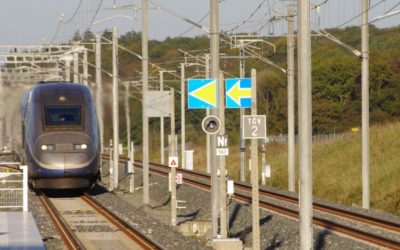
ERTMS: The European Rail Traffic Management System
ERTMS started as Europe’s answer to fragmented national train protection and signalling systems. Today, it should be understood more broadly: as one of the digital backbones of the future European railway. It enables interoperable train control, supports the migration...

ERTMS/ETCS: The European Train Control System
ERTMS/ETCS is the European Train Control System. Its role is not to drive the train, but to supervise whether the train is authorised to move, at which speed, and up to which point. It provides cab signalling, movement supervision and intervention when the train would...
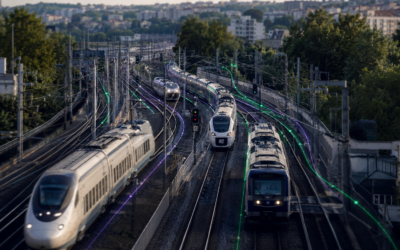
ETCS Capacity: From Fixed Blocks to Moving Block
Railway capacity is often presented as a signalling problem: reduce block lengths, introduce ETCS Level 2, then move towards Hybrid Train Detection or Moving Block. This view is useful, but incomplete. Capacity is not created by signalling alone. It emerges from the...
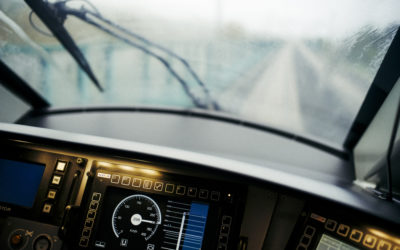
ERTMS/ATO: Europe’s Interoperable Train Autopilot
ERTMS/ATO is often introduced as the European interoperable train autopilot. This description is useful, but it does not fully explain why ERTMS/ATO matters. Its role is not only to automate traction and braking. ERTMS/ATO is the first standardised automation layer...
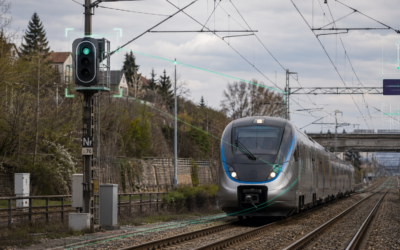
Migration to ERTMS/ATO: Lineside Signalling Interpretation
ERTMS/ATO is Europe’s interoperable solution for automatic train operation, but its target architecture depends on ERTMS/ETCS. This creates a practical migration problem. Many lines will remain operated for years with national signalling systems and lineside signals,...
DATO
Explore the transition from automatic driving to digital, automated and autonomous railway operation.
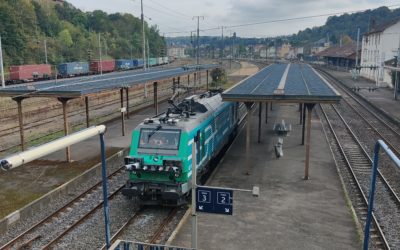
Railway Automation: From GoA2 to GoA4
The image of an autonomous train is powerful: a train moving without a driver, executing its mission automatically, supervised by digital systems rather than by onboard staff. But this image captures only the visible part of the transition. The move from GoA2 to GoA4 is not only an increase in automation level. It is a transfer of operational responsibilities from the driver and onboard staff to...
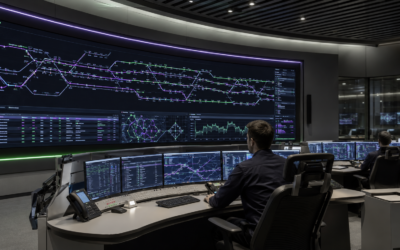
Traffic Management System: From Traffic Supervision to Automated Railway Operations
The train is the most visible part of railway automation. It is where automatic driving happens, where ETCS supervision is displayed, and where the transition towards GoA4 becomes immediately tangible. But railway operation is not performed inside the train alone. A train runs in a shared network. Its movement interacts with other trains, infrastructure availability, platform occupation,...
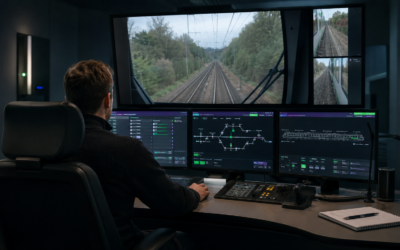
Remote Driving: From Technical Train Movements to GoA4 Degraded Operation
The first image is easy to understand: a train driven from another location. But Remote Driving is not only remote control. It is a cross-domain railway capability that connects rolling stock functions, train control, communication links, perception, cybersecurity, operational rules, human factors and safety supervision. Its first value may not come from spectacular mainline operation at high...
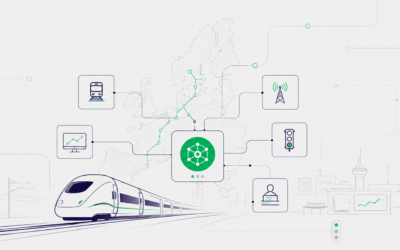
DATO as a System-of-Systems: Building the Next European Railway Architecture
DATO first appears through technologies. Automatic Train Operation, Moving Block, Remote Driving, GoA4, advanced Traffic Management Systems, FRMCS, train integrity and autonomous decision-making are the visible entry points. They can be specified, procured, tested and demonstrated. But this first view does not yet capture the architecture problem. DATO is not a collection of automation...
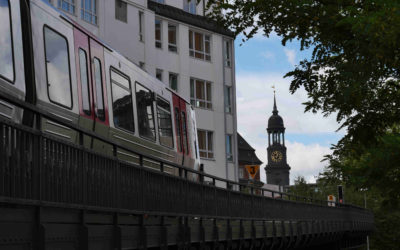
Stepping towards digital and automatic rail operation with EURail-FP2-R2DATO: a systemic approach
Abstract. In the context of mega trends, innovation is enhancing the rail sector to ensure affordable, safe, resilient, interoperable, and digitalized rail transport of the future. Several initiatives have emerged at the European level, notably the FP2-R2DATO project in Europe’s Rail JU developing new solutions aimed at facilitating and delivering Digital and Automated up to Autonomous Train...