
Abstract. In the context of mega trends, innovation is enhancing the rail sector to ensure affordable, safe, resilient, interoperable, and digitalized rail transport of the future. Several initiatives have emerged at the European level, notably the FP2-R2DATO project in Europe’s Rail JU developing new solutions aimed at facilitating and delivering Digital and Automated up to Autonomous Train Operations (DATO). This project addresses many “unknown” future technologies that must be integrated with one another. Consequently, several system interfaces need to be managed. In addition, the project delivers DATO solutions that will need to be integrated in existing rail systems. The literature refers to this as “technology infusion” which emphasizes technical and organizational complexities threatening the project achievement. This article proposes a generic analytical framework based on the concept of “systemic exploration”. It identifies the main levers to overcome the complexity of future systems when designing DATO’s architecture. The findings are twofold. First, the research highlights the need for a simple, innovative, and easily integrable architecture for a resilient digital system of systems. Second, it underlines the importance of integrating the “humanmachine-process” in such complex projects to effectively rationalize the data exchanged between rail “service-organization-system”.
Joseph MANSOUR SALAMÉ, SNCF Réseau, Paris, France [ORCID: 0000-0001-6777-8261]
Jean-Baptiste SIMONNET, SNCF Holding, Paris, France [ORCID: 0009-0003-
3763-0399]
Bastian SIMONI, ALSTOM Group, Paris, France [ORCID: 0009-0005-4639-787X]
Sana DEBBECH, SNCF Réseau, Paris, France [ORCID: 0000-0002-4003-6505]
This article has been published in Re-Generation in Transport, Proceedings of the 11th TRA Conference, 2026, Budapest, Hungary, by Springer Nature Switzerland AG. This article is under licence CC-BY.
Introduction
The rail transport mode faces several mega‑trend challenges, including demographic changes [18, 21], increased mobility demand [9], energy‑supply constraints [20], infrastructure‑resilience needs [3], and climate‑change impacts [4, 15].
Consequently, significant technological advancements have emerged, leading to functional breakthroughs that require a holistic re-evaluation of system architectures within the diverse legacy. This phenomenon is known in the literature as “technological infusion” [1, 2]. Additionally, there is a “cooperative challenge” [1] related to the various stakeholders and the need for compatibility between the innovative systems being developed, along with the uncertainties present in their implementation context.
In this context, Europe’s Rail Joint Undertaking (EU-Rail) has emerged as a catalyst for innovative projects in the rail sector, aiming to improve rail systems’ interoperability and performances [14]. While the EU-Rail System Pillar acts as a generic system integrator by collecting and revising the necessary documents feeding the Technical Specifications for Interoperability (TSI) and the European standardization process, the project FP2-R2DATO explores and showcases new technologies that will shape Digital and Automated up to Autonomous Train Operations (DATO). This includes advancements in the Future Railway Mobile Communication System (FRMCS) and the design of new features for the European Rail Traffic Management System (ERTMS).
DATO relies on various digital solutions that are currently being explored, developed, and deployed. FP2-R2DATO project’s success depends on its ability to understand these technologies, derive value from their implementation, and create synergies through their integration. A significant challenge is to converge architectures that support DATO while considering both existing and future systems. This requires identifying the functions of the overall products or systems, designing interfaces between each technology according to their roles within the larger system, standardizing data exchanges among the different technologies, and anticipating the overall life cycle through a systemic approach.
FP2-R2DATO must answer: What is the simplest architecture for facilitating system integration among heterogeneous technologies? To address this, the study organizes retrospectively theoretical tools relevant to complex systems of systems. It introduces the concept of “systemic exploration” and illustrates how this approach can assist the project in refining and simplifying its architecture. The paper also discusses the key levers and success factors that contribute to an effective system integration.
2. Theoretical tools
2.1 Complexity, system, and architecture
The concept of complexity comes from Latin “cum” and “plectere” (tied together) characterizing elements that are connected and interacting together [5]. The concept of System is defined by INCOSE [7] as “an arrangement of elements that together exhibit behavior or meaning that the individual constituents do not”. System and complexity are thus related. Ladyman et al. [11] provides “sufficient and necessary” conditions for defining a complex system: “A complex system is a set of multiple elements that interact in a disordered manner, resulting in a robust organization and memory.” Architecture plays a vital role in a system’s ability to meet stakeholder’s business and mission goals [10]. System architecture defines the organization of a system, its components, and their relationships as well as to the environment and the principles guiding its design and evolution [8]. The literature also focuses on the structure, modelling and expression through a defined language, of architecture descriptions [16, 19].
2.2 System of systems (SoS)
Boardman and Sauser [1] have defined five criteria to differentiate between systems and SoS (Table 1).
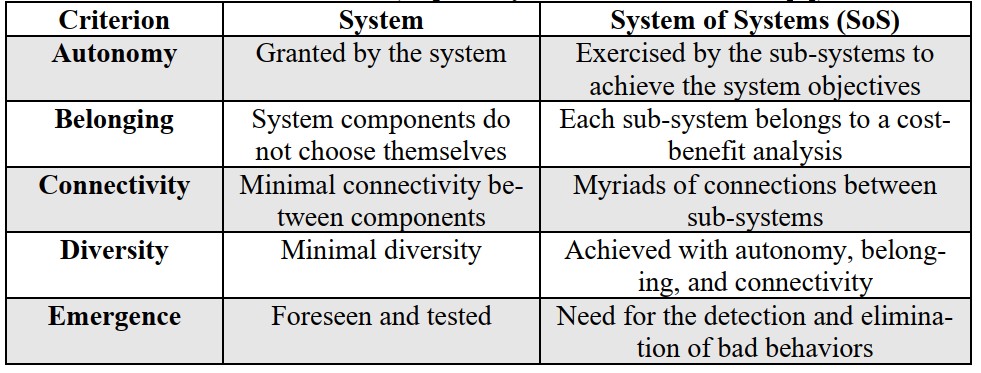
Table 1. SoS criteria (inspired by Boardman and Sauser [1])
2.3 Systemic exploration
This paper focuses on Le Moigne’s systemic exploration [13], which has been used since the 1990s due to its effectiveness in organizing knowledge for system engineering [6]. Le Moigne initiates this approach regarding his critics of Descartes’s “Discourse on the Method”. Descartes analyzes a system by breaking it down into several subelements, starting with the simplest element and working up to the most difficult. Le Moigne argues that this method omits the interactions between the various sub-elements and increases system complexity. He thus proposes the “Theory of the General
System, Theory of Modelling”, introducing:
- Four precepts of the new discourse:
- Relevance: Every system is defined in relation to the modeler’s intentions, which may evolve.
- Globality: Every system should be viewed as part of a larger whole, recognizing its functional relationship with its context without necessarily having an accurate representation.
- Teleology: Every system should be interpreted regarding its behavior and interactions.
- Aggregability: The illusion of objectivity in conducting an exhaustive enumeration of aggregates should be avoided.
- Systemic modelling: Complementary to analytical modelling, which focuses on problem-solving, systemic modelling prioritizes understanding the system.
- Four axes of the systemic exploration: Ontological axis defining the system structure; Teleological axis defining the system’s purpose; Functional axis defining the main functions of the system; Genetic axis defining how the system evolves.
2.4 Other methods for innovative design in the context of complex SoS
Other methods for designing complex systems exist. The Design Structure Matrix identifies the flows between system components [2, 17]. This approach can also go a step further by representing multiple architectures in the same matrix and studying the difference between the architectures’ flows.
Another method is the DKCP framework, based on the CK theory [12]. It proposes to partition concepts and knowledge to clarify breakthroughs and uncertainties. These methods suggest that architecture serves as both structural frameworks and repositories of conceptual and knowledge-based references, enabling continuous exploration while securing deployment and migration paths.
3 Application to FP2-R2DATO
This section synthesizes the initial results of activities that began in 2024 by applying retrospectively the systemic exploration using different points of view provided in FP2- R2DATO architecture file, as illustrated in Figure 1:
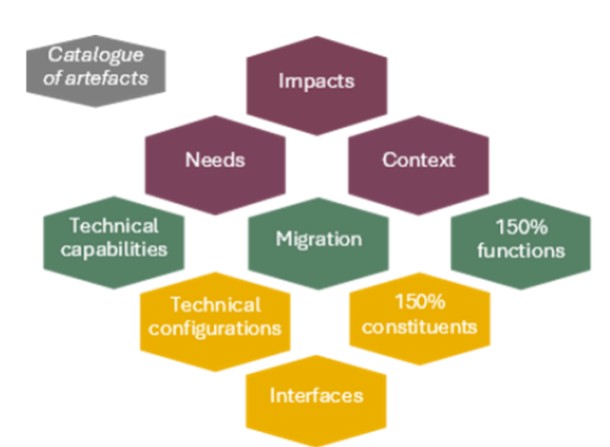
Fig. 1. Description of the views developed in FP2-R2DATO architecture file
3.1 Why is DATO a complex SoS?
Considering the five criteria of Boardman and Sauser [1], DATO is a System of Systems. Indeed, its technologies are developed in separate work packages and remain independently deployable. As each work package produces specifications autonomously, definitions of adjacent systems, interface descriptions, and overall SoS understanding become heterogeneous, increasing short and long-term risks for technology infusion.
Each technology has its cost-benefit analysis and there are various options to connect DATO’s systems. Many results are used by rail institutions to standardize and harmonize technologies. The project looks at designing solutions that will satisfy new expectations and eliminate bad behavior.
In addition, DATO is complex since it is a new technological SoS (system integration); evolving in an existing legacy (technology infusion); and involving stakeholders with potentially divergent interests (cooperative challenge): Infrastructure managers (IM); Railway undertakings (RU); and Suppliers (SP).
3.2 Using the systemic exploration, how to characterize FP2-R2DATO?
Ontological axis: What is FP2-R2DATO project’s system of interest?
FP2-R2DATO project designs systems that are integrated on both trackside and onboard, alongside other systems. Figure 2 represents not only a conceptual architectural view but also one of the possible technical configurations of DATO, identified through peer reviews with the work‑package engineering teams. The view suggests an implementation of DATO systems, with their operating modes, to satisfy DATO capabilities.
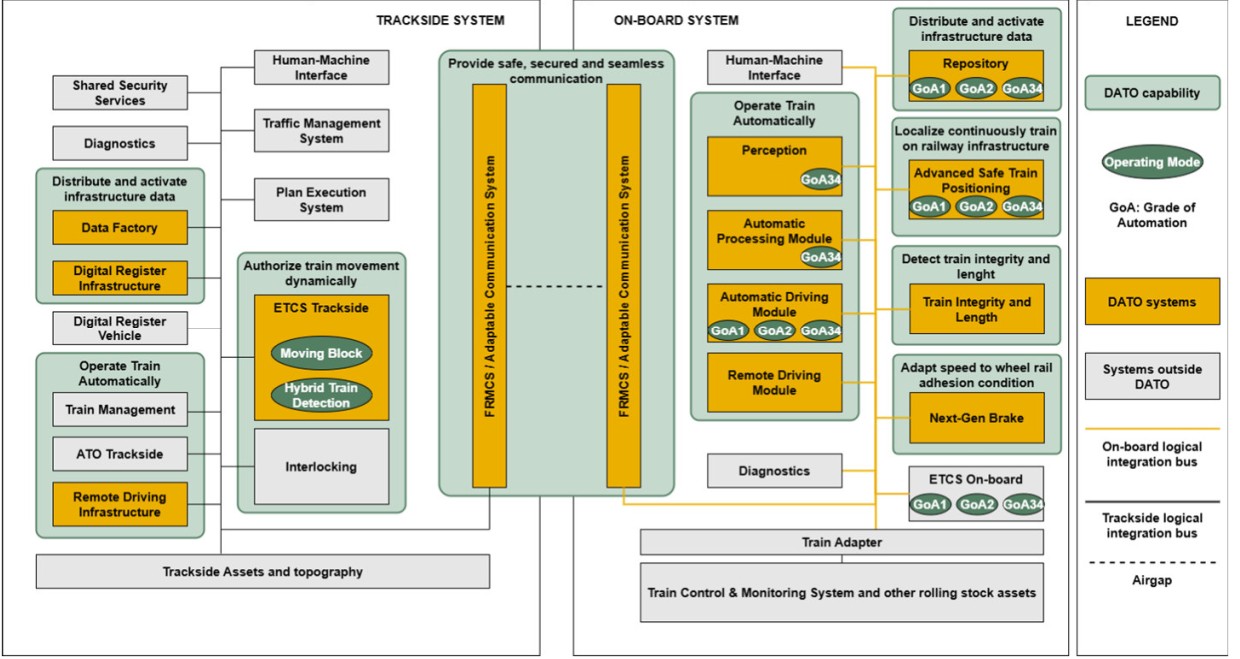
Fig. 2. DATO technical configurations’ view
Teleological axis: What should FP2-R2DATO accomplish?
Expectations towards FP2‑R2DATO innovations can be articulated across three levels:
- Level 1, Strategic issues regarding passengers and freight forwarder: Reduce costs; Increase transport capacity; and Secure punctuality,
- Level 2, Business issues regarding direct stakeholders: All stakeholders aim to increase the usage intensity of their assets. Infrastructure managers aim to supply more resilient network capacity; Rail undertakings aim to offer attractive transport services; and Suppliers aim to deliver new systems and technologies,
- Level 3, Technical issues: Authorize fast and safe movement [A]; Optimize rail production process [B]; Deliver reliable and efficient transport [C]; Integrate digital technologies [D]; and Manage incidents [E].
The systemic exploration consolidated heterogeneous work‑package outputs into a coherent, and traceable high‑level catalogue consolidating DATO engineering items.
Functional axis: What are the system capabilities delivered by FP2-R2DATO?
The consolidated catalogue of engineering items is structured hierarchically and traceable to the originating work packages. It allows to identify capabilities and link them to the technical issues as addressed in Table 2.
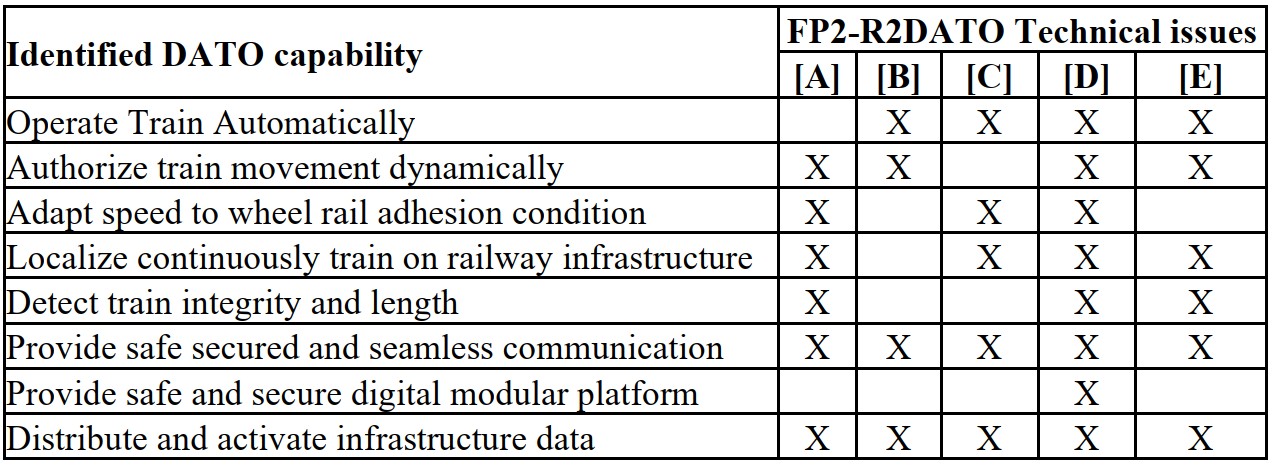
Table 2. Correlation between DATO capabilities and FP2-R2DATO technical issues
Genetic axis: How should FP2-R2DATO evolve?
Systemic exploration supported the identification of multiple DATO technical configurations (Figure 2), showing how different system combinations satisfy distinct capabilities and highlighting dependencies to be managed during integration and testing. FP2‑R2DATO also develops DATO systems forming a digital toolbox for automation, requiring a progressive migration strategy to address dependencies and compatibility.
Beyond technology, DATO affects organizational structures and processes. Data offers a dual transformation opportunity – better support to rail workers and improved customer service – while enabling anticipation of deployment maturity as innovative solutions become ready.
Linking FP2-R2DATO’s metamodel and Le Moigne’s systemic exploration:
Since the systemic exploration framework presented in this paper is retrospective, it is interesting to link it to the FP2-R2DATO architecture’s metamodel (Figure 3).
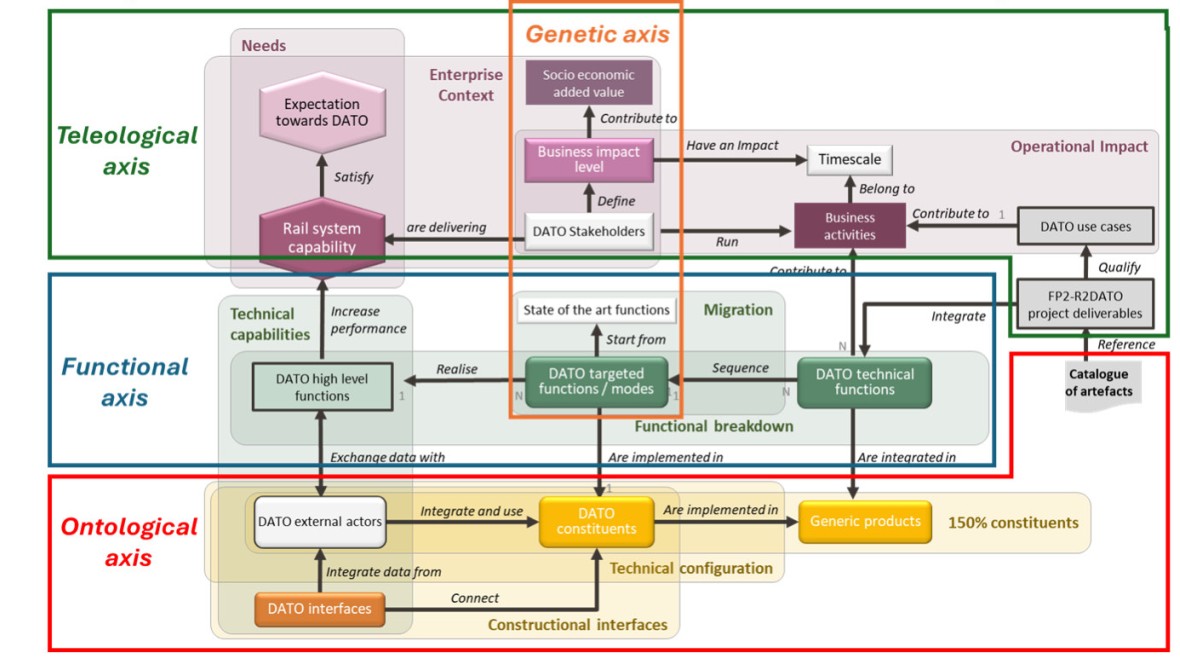
Fig. 3. Systemic exploration of FP2-R2DATO’s metamodel
4 Discussion and conclusion
FP2‑R2DATO has worked on defining a coherent architecture for its SoS, using systemic exploration to support the integration of independently developed system specifications. The approach enabled the convergence of heterogeneous work‑package outputs into a unified high‑level catalogue with full traceability, the identification of DATO capabilities, and the clarification of possible technical configurations of DATO.
These results strengthened the architectural approach by reducing complexity, revealing functional dependencies, and improving the project’s ability to anticipate emergence during integration and testing. The key question of this paper has thus been: what is the simplest architecture to guide system integration between heterogeneous technologies? It can be argued that the simplest architecture is one that satisfies five criteria: need fulfilment, mathematical completeness, complexity reduction, emergence acknowledgement (resilience), and effective system integration.
The architecture must explore the teleological and functional axes of DATO, i.e., allow the coupling of all the constituents of the SoS to meet concrete and measurable needs. With a relevant logical partitioning of concepts and information, the metamodel must demonstrate a mathematical completeness of the SoS description, since we argued that systemic modelling is not analytical problem solving but is complementary to it. Yet, we define completeness as what is “necessary but sufficient”. This leads us to an architecture that enables designers to manage the complexity of the SoS by simplifying the Connectivity and Diversity aspects of complexity (e.g. rationalise functional flows, adopt common vocabulary on solutions and targeted new knowledge).
With its architecture file, FP2-R2DATO now explicitly accounts for emergence‑related risks, supported by the shared System‑of‑Systems understanding produced through the systemic exploration.
Finally, since DATO evolves in the rail legacy, the architecture must particularly integrate the external functions, and constraints from its surroundings, e.g., railway assets. DATO should avoid exporting hard constraints on system integration. Indeed, new technologies create value only when they bring early benefit once they are successfully infused into their environment [2]. Therefore, designing the architecture presents an opportunity to address these challenges in a versatile manner by rationalising levels of performance aligned with implementation contexts. A migration strategy must be developed to address DATO’s infusion of new functionalities and constituents since there is significant variation between legacy systems and operations, particularly concerning different performance regimes and organisations.
However, DATO architecture does not only shape the data exchange between its components but stands in a larger European context that must address issues of data exchange, convergence, and processing. That leads us to question how to organise the transport and rail data governance in the future, raising the institutional and organizational questions for stakeholders.
The article can be downloaded as PDF here: link.
5 References
1. Boardman, J., Sauser, B.: System of systems – the meaning of of. In: 2006 IEEE/SMC International Conference on System of Systems Engineering, pp. 118–123 (2006).
2. De Weck, O.L.: Technology infusion analysis. In: Technology Roadmapping and Development: A Quantitative Approach to the Management of Technology, pp. 329–359. Springer, (2022).
3. European Union: White paper for European defence – Readiness 2030. European Commission (2025). https://defence-industry-space.ec.europa.eu, last accessed 2026/03/23.
4. European Union: Strategy: Priorities 2019–2024: A European Green Deal (2019). https://ec.europa.eu/info/strategy/priorities-2019-2024, last accessed 2026/03/23.
5. Wade, J., Heydari, B.: Complexity: definition and reduction techniques. In: Proceedings of the Poster Workshop at the 2014 Complex Systems Design & Management International Conference, pp. 213–226 (2014).
6. Hygounenc, E.: Ingénierie des systèmes : analyse, modélisation et simulation des systèmes. ISTE Editions, London (2023).
7. INCOSE: Systems engineering definitions. https://www.incose.org/about-systems-engineering/system-and-se-definitions, last accessed 2026/03/23.
8. International Organization for Standardization.: ISO/IEC/IEEE 42010:2022 — Systems and software engineering — Architecture description. (2022).
9. International Transport Forum. ITF Transport Outlook 2023: Summary, OECD Publishing, Paris (2023).
10. Klein, J., Van Vliet, H.: A systematic review of system-of-systems architecture research. In: Proceedings of the 9th International ACM SIGSOFT Conference on Quality of Software Architectures, pp. 13–22 (2013).
11. Ladyman, J., Lambert, J., Wiesner, K.: What is a complex system? European Journal for Philosophy of Science 3(1), 33–67 (2013).
12. Laousse, D.: L’institutionnalisation de l’innovation intensive dans les transports publics. Industrialiser, métaboliser et gouverner l’innovation. Université Paris sciences et lettres (2018).
13. Le Moigne, J. L. : La théorie du système général : théorie de la modélisation. FeniXX (1994).
14. Rajabalinejad, M.: System integration: Challenges and opportunities for rail transport. In: 2018 13th Annual Conference on System of Systems Engineering (SoSE), pp. 471–476. IEEE (2018).
15. Ritchie, H.: Cars, planes, trains: where do CO₂ emissions from transport come from https://ourworldindata.org/co2-emissions-from-transport, last accessed 2026/03/23.
16. Roques, P.: MBSE with the ARCADIA method and the Capella tool. In: 8th European Congress on Embedded Real Time Software and Systems (ERTS 2016), Toulouse, France (2016).
17. Suh, E. S., Furst, M. R., Mihalyov, K. J., De Weck, O.: Technology infusion for complex
systems: A framework and case study. Systems Engineering, 13(2), 186-203 (2010).
18. United Nations, Department of Economic and Social Affairs, Population Division.: World Population Prospects 2024: Summary of Results. UN, New York (2024).
19. Voirin, J.L.: Arcadia user guide, Arcadia principles and contents overview. Thales (2023).
20. The Shift Project.: The EU can expect to suffer oil depletion by 2030. https://theshiftproject.org/en/publications/oil-depression-2030/, last accessed 2026/03/23.
21. World Bank: World development report 2023: migrants, refugees, and societies. World Bank, Washington, DC (2023).